
Inspection Insights
Why Vegetation Growth on a Façade Is a Problem That Needs Fixing
9 October 2026
Why Vegetation Growth on a Façade Is a Problem That Needs Fixing
Vegetation growing on a building façade may appear harmless or even attractive, but uncontrolled growth can indicate persistent moisture and contribute to the deterioration of façade materials. It is a condition we frequently encounter during inspections in Singapore, where the warm, humid climate allows small plants, creepers and roots to establish themselves quickly in cracks, open joints, drainage paths and other damp areas. If the underlying cause is not investigated, the affected area may continue to deteriorate, potentially causing substantial damage and contributing to unsafe façade conditions.
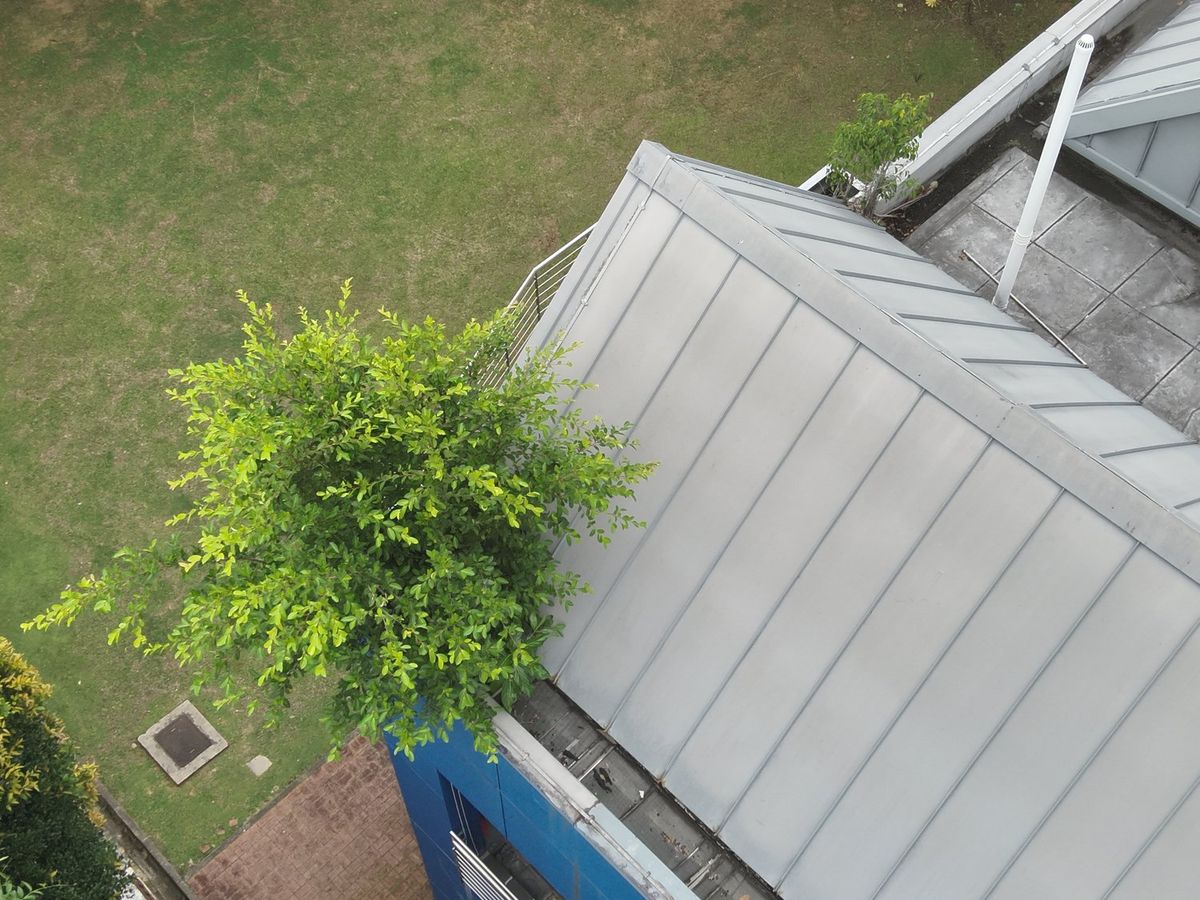
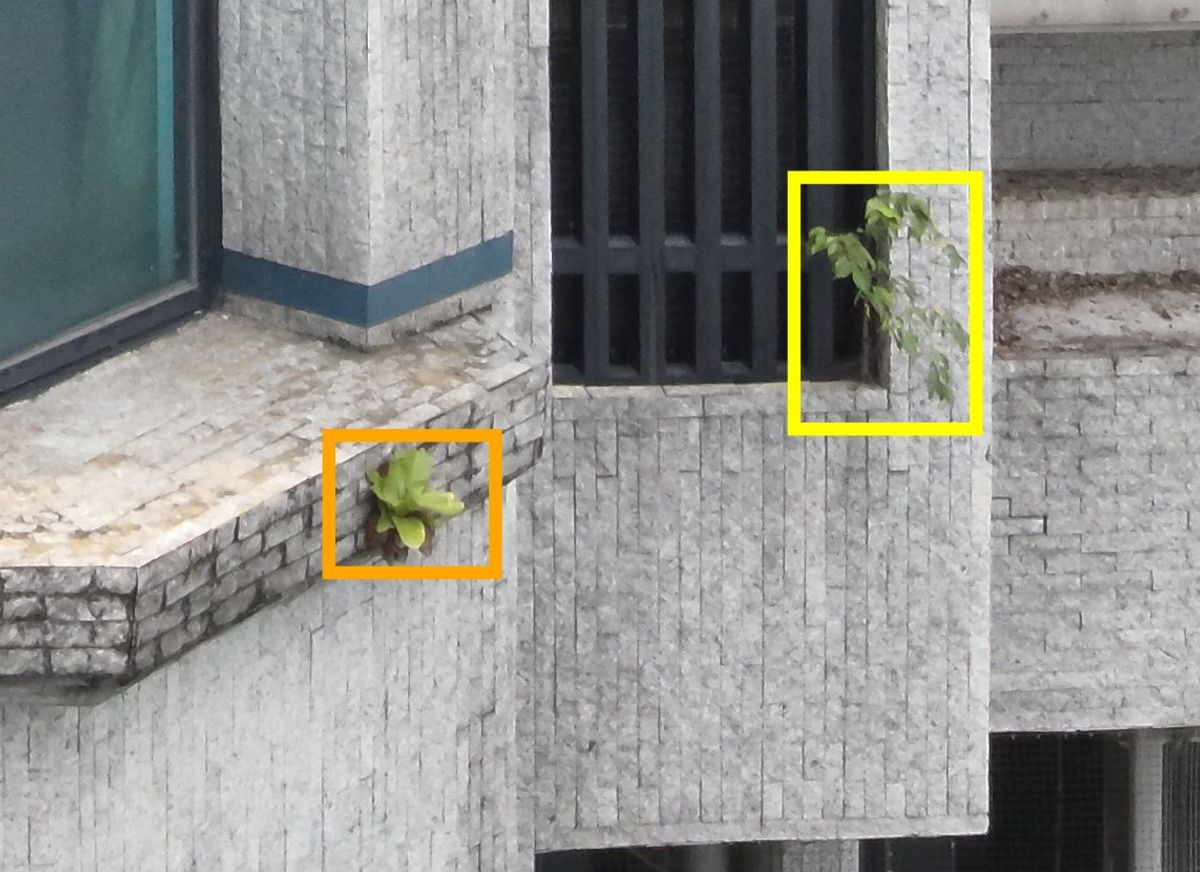
What Causes Vegetation to Grow on a Building Façade?
Vegetation requires moisture, nutrients and a suitable surface on which to establish itself. On façades, growth is commonly associated with long periods of dampness, water leakage, poor drainage, shaded elevations, leaking pipes or gutters, defective sealant, open joints and cracks that collect dirt and organic material. Rough or porous finishes can retain moisture and provide a foothold for moss and algae, while larger plants may take root where joints or damaged surfaces contain enough accumulated material.
The visible vegetation is therefore often a symptom rather than the only problem. Removing the growth without addressing the moisture source or damaged substrate may provide only a temporary improvement.
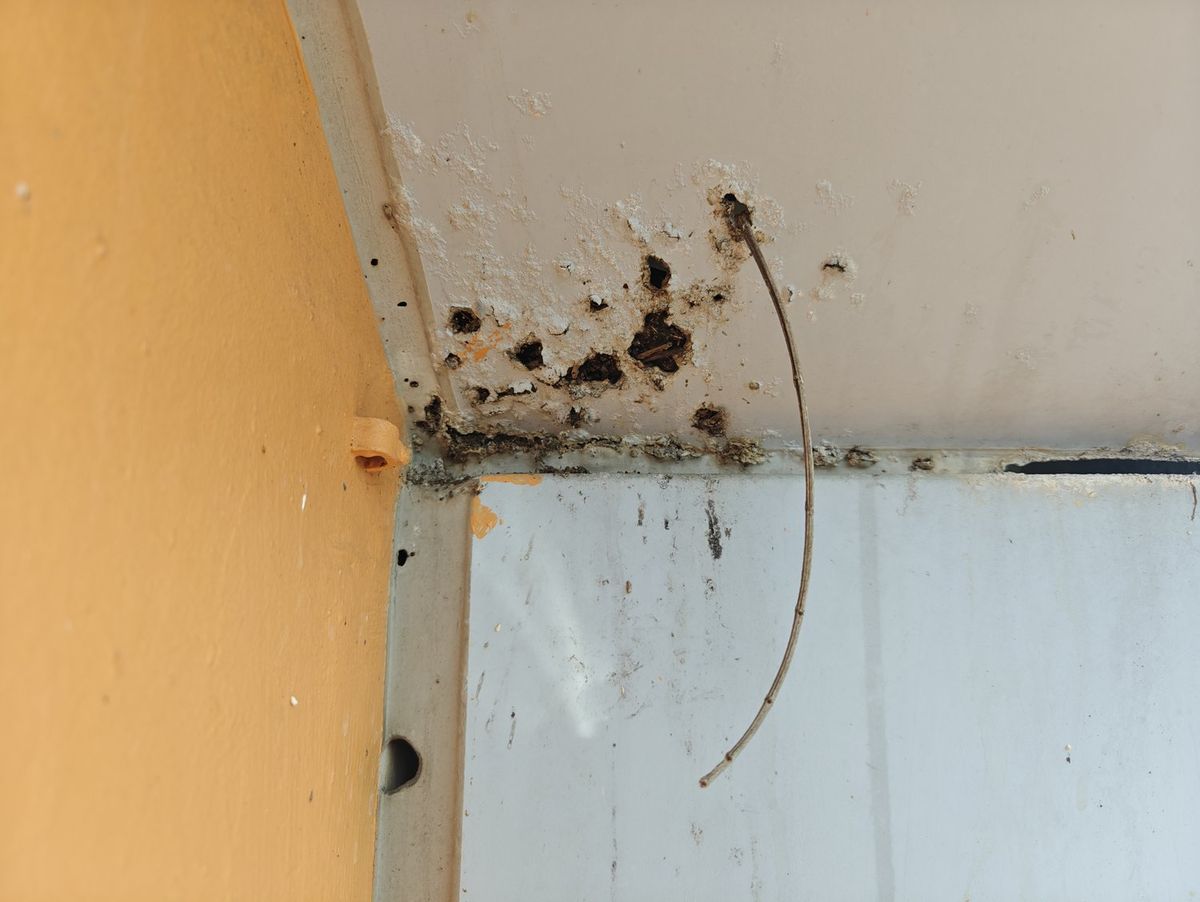
Root system growing through soffit
How Vegetation Can Damage the Façade
Roots and stems can enter existing cracks, gaps and open joints. As they grow, they may widen these openings, loosen surface finishes or disturb sealant and pointing. This can allow more water to enter the façade and accelerate local deterioration. Growth around drainage outlets may also restrict water flow, causing overflow or prolonged wetting of adjacent surfaces.
Moss and dense vegetation can hold moisture against the façade for extended periods. Repeated wetting may contribute to staining, coating failure, biological growth and deterioration of porous finishes. Where water penetrates behind the surface, it may affect render, plaster, masonry, fixings or concealed components. The exact risk depends on the façade system and the condition of the affected area.
Why Prompt Action Is Important
Early removal and investigation are generally simpler than waiting for extensive growth to become established. Small plants can develop larger root systems, drainage routes may become increasingly obstructed, and continued moisture exposure can enlarge the affected area. Delayed action may therefore increase the extent and cost of cleaning, access and repair.
Discuss a Façade Inspection with Bizlify
Bizlify provides technology-enabled façade inspection services in Singapore, combining systematic drone visual inspection, close-range verification, digital defect management and structured reporting. Speak with Bizlify if vegetation growth, staining, moisture or other visible façade conditions require investigation.
Discuss Your Inspection Requirements